Tummy Tuck Scars: Where They Are Located, How They Heal, and How to Improve Their Appearance
By Dr. John Orlas Blair | Plastic Surgeon in Medellín, Colombia
One of the most common concerns patients have before undergoing a tummy tuck is whether the scar will be noticeable.
It is an important question. A tummy tuck, medically known as abdominoplasty, can remove excess abdominal skin, improve body contour, and address abdominal muscle separation when appropriate. However, these improvements require surgical incisions that leave permanent scars.
The goal is not to promise a scar-free abdomen. It is to carefully plan the incision, protect the healing tissues, and help the scar mature as favorably as possible.
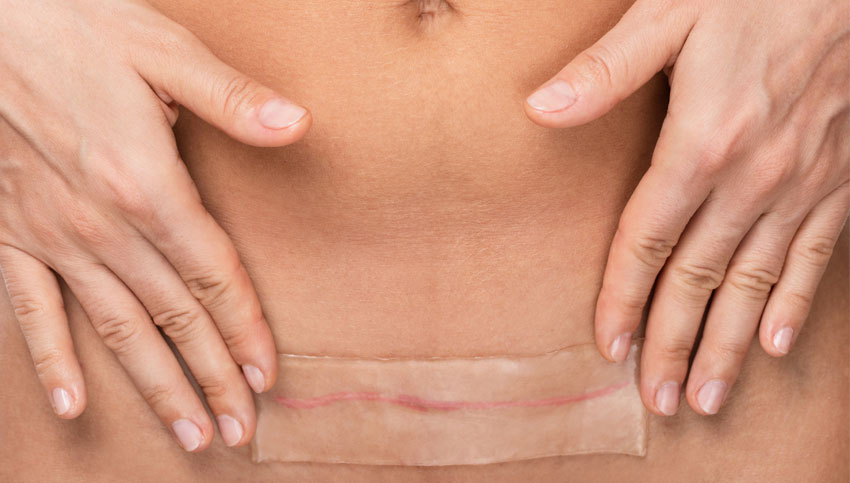
A tummy tuck scar is typically located across the lower abdomen, near the underwear or bikini line. Its appearance gradually changes over several months, with significant maturation often occurring during the first year and sometimes continuing beyond that.
Understanding what to expect before and after surgery can help patients make informed decisions and set realistic expectations.
Where Is a Tummy Tuck Scar Located?
During a full tummy tuck, the main incision is usually made across the lower abdomen, just above the pubic area, extending toward the hips.
Whenever anatomically appropriate, the incision is planned so that it may be concealed beneath certain types of underwear or swimwear.
The length and exact position depend on the amount of excess skin, individual anatomy, and the extent of correction required.
A full tummy tuck also typically involves a small scar around the belly button. This allows the umbilicus to be brought through the repositioned abdominal skin.
In patients with substantial excess skin following major weight loss, a fleur-de-lis abdominoplasty may be necessary. This procedure adds a vertical abdominal incision to address skin excess in more than one direction.
Can a tummy tuck scar be completely hidden?
Not always.
While strategic placement can make a scar less noticeable under clothing, no surgeon can guarantee that it will be hidden beneath every bikini or underwear style.
The incision must be designed according to the patient’s anatomy and the amount of skin that needs to be removed.
Placing a scar excessively low is not automatically better if doing so compromises tissue closure or the overall abdominal contour.
A well-planned tummy tuck balances scar location, appropriate skin removal, tissue tension, and natural-looking proportions.
Tummy Tuck Scar Healing Timeline: What to Expect
A tummy tuck incision may close within the early recovery period, but complete scar maturation takes considerably longer.
Healing generally progresses through several stages.
Weeks 1–2: Initial wound healing
During the first two weeks, the priority is protecting the surgical incision.
Swelling, altered sensation, and a visible incision line are common.
The early appearance of a wound does not reliably predict the final appearance of the scar.
Patients should follow their surgeon’s instructions regarding dressings, hygiene, medications, and physical activity.
Scar creams, oils, or home remedies should not be applied to an open incision without medical approval.
Weeks 3–8: Early scar formation
Once the wound has healed sufficiently, the scar may become pink or red and may feel firmer than the surrounding skin.
These changes can be part of normal healing.
Depending on the condition of the incision, a surgeon may recommend silicone-based scar care or other appropriate measures.
Treatment should begin only after the wound is fully closed and the surgeon confirms that it is safe.
Months 2–6: Scar remodeling
During this period, the body continues reorganizing collagen within the scar.
Some scars temporarily appear redder, thicker, or firmer before gradually softening.
Patients heal at different rates. A scar that remains noticeable at three months is not necessarily abnormal.
However, persistent thickening, excessive redness, discomfort, or raised tissue may require assessment and targeted treatment.
Months 6–12 and beyond: Scar maturation
As healing progresses, scars often become flatter, softer, and less red.
Many patients see meaningful improvement during the first year.
Some scars continue maturing for 12 to 18 months or longer.
A tummy tuck scar is permanent, but its visibility may decrease substantially over time.
The final appearance depends on individual healing, skin characteristics, surgical planning, and postoperative care.
What Determines How Well a Tummy Tuck Scar Heals?
Not every patient heals in the same way.
Several factors influence scar quality:
Incision planning: Careful placement, symmetry, and adaptation to the abdominal anatomy.
Tissue tension: Excessive tension across a healing incision may contribute to widening.
Blood supply: Adequate tissue circulation is essential for wound healing.
Genetics and skin characteristics: Some patients are more prone to pigmentation changes, hypertrophic scarring, or keloids.
Underlying medical conditions: Poorly controlled diabetes and certain other conditions may impair healing.
Nicotine exposure: Smoking and nicotine vaping increase the risk of wound-healing complications.
Postoperative care: Following activity restrictions and attending medical follow-up visits can help support recovery.
A thoughtful surgical plan considers more than the shape of the abdomen. It also considers where scars will be located and how the tissues are likely to heal.
How to Improve the Appearance of a Tummy Tuck Scar
Several evidence-informed approaches may help improve scar appearance.
The appropriate treatment depends on the stage of healing and the patient’s individual needs.
1. Protect the incision from the beginning
Early wound care is essential.
During the initial recovery period, protecting the surgical closure and avoiding unnecessary tension are generally more important than applying multiple cosmetic products.
Patients should follow their surgeon’s instructions carefully and report any concerning changes promptly.
2. Consider silicone gel or silicone sheets
Silicone-based products are among the most widely studied noninvasive options for surgical scar management.
They may help improve certain aspects of scar thickness, redness, and texture, although results vary and the strength of evidence differs across studies.
Silicone should generally be introduced only after the incision has completely closed and with the surgeon’s approval.
It should not be applied over an open wound.
3. Protect the scar from sunlight
Sun exposure during scar maturation can contribute to prolonged discoloration or pigmentation changes.
Protective clothing and appropriate sunscreen on fully healed skin can help reduce this risk.
Sun protection is particularly important during the first year after surgery.
4. Avoid excessive tension on healing tissues
Heavy lifting, strenuous exercise, and certain movements can place unnecessary tension across the incision.
Patients should resume physical activities according to their surgeon’s instructions rather than following a universal timeline.
Appropriate activity restrictions support both wound healing and the overall surgical result.
5. Seek medical evaluation for abnormal scarring
Some patients develop scars that become raised, thickened, itchy, or persistently red.
Hypertrophic scars generally remain within the boundaries of the original incision, while keloids may extend beyond them.
Early recognition is useful because treatment should be matched to the type and characteristics of the scar.
Can Fractional CO2 Laser Improve Tummy Tuck Scars?
Fractional CO2 laser treatment may improve the appearance of selected surgical scars, particularly when texture irregularities or thickened scar tissue are present.
The treatment works by creating controlled areas of skin remodeling.
However, not every scar requires laser treatment, and different laser technologies address different concerns.
For example, vascular lasers may be more appropriate for persistent redness, while fractional resurfacing may be considered for certain texture irregularities.
The decision depends on scar maturity, skin phototype, pigmentation risk, wound condition, and the patient’s clinical history.
Fractional CO2 laser does not erase a tummy tuck scar or guarantee an invisible result.
Treatment timing must also be individualized. An incision must be appropriately healed before procedures that affect scar tissue are considered.
Recent systematic reviews support a tailored approach to scar management rather than relying on a single treatment for every patient.
What Does a Tummy Tuck Scar Look Like After One Year?
After one year, many tummy tuck scars appear flatter, lighter, and softer than they did during the early postoperative months.
However, there is considerable individual variation.
Some patients develop relatively fine scars that are easily concealed by clothing. Others may have wider, darker, or more noticeable scars.
Skin pigmentation, genetics, incision tension, and healing complications can all influence the final appearance.
If a scar remains significantly raised, widened, or irregular, additional treatment may be considered.
Scar revision surgery is generally reserved for selected cases after sufficient maturation, often around 12 to 18 months, unless an earlier intervention is medically indicated.
Why the Belly Button Matters in Natural-Looking Tummy Tuck Results
A successful tummy tuck should not be evaluated only by how flat the abdomen appears.
The belly button plays an important role in the overall aesthetic result.
Its shape, position, proportions, and relationship to the surrounding abdominal skin affect how natural the abdomen looks.
The horizontal incision, belly button design, waist contour, and abdominal proportions should be considered together.
For patients who also have localized fat deposits, liposuction may be combined with abdominoplasty. This is commonly referred to as lipoabdominoplasty.
The appropriate combination depends on each patient’s anatomy and surgical risk assessment.
Frequently Asked Questions About Tummy Tuck Scars
Do tummy tuck scars ever disappear completely?
No. A tummy tuck produces permanent surgical scars. Their visibility can improve considerably as they mature, but they do not disappear completely.
How long does it take for a tummy tuck scar to turn white?
There is no fixed timeline. Many scars gradually fade over 6 to 12 months, while others continue changing beyond that period. The final color varies according to individual skin characteristics.
Can my C-section scar be removed during a tummy tuck?
In some cases, yes. A previous C-section scar may be incorporated into or removed as part of the tummy tuck incision. This depends on its position, the amount of skin being removed, and the surgical plan.
Does a mini tummy tuck leave a smaller scar?
Usually, but it also treats a more limited area. Choosing a mini tummy tuck solely to obtain a shorter incision may lead to an inadequate result if excess skin affects the entire abdomen.
Is it normal for a tummy tuck scar to feel hard?
Some firmness can occur during normal scar formation. However, progressive thickening, significant pain, or persistent abnormalities should be evaluated by the treating surgeon.
When should I contact my surgeon?
Contact your surgical team promptly if you experience spreading redness, purulent drainage, fever, wound separation, persistent bleeding, or increasing pain. Breathing difficulties or symptoms suggestive of a blood clot require urgent medical attention.
Planning a Tummy Tuck in Medellín, Colombia
When considering a tummy tuck, scar planning should be part of the initial surgical consultation rather than an afterthought.
A comprehensive assessment considers skin quality, the amount of excess tissue, abdominal wall condition, previous scars, fat distribution, and overall body proportions.
As a plastic surgeon practicing in Medellín, Colombia, my approach is based on individualized surgical planning, natural-looking abdominal contours, thoughtful scar positioning, belly button design, and patient safety.
Not every patient needs the same surgical technique, and no surgical result can be guaranteed.
For international patients considering surgery in Colombia, planning postoperative care and follow-up before traveling home is also essential.
The best starting point is a personalized consultation to determine whether abdominoplasty is appropriate and what results can reasonably be expected.
Learn more about tummy tuck surgery in Medellín with Dr. John Orlas Blair and schedule your consultation.
Medical References
Mayo Clinic. Tummy tuck. Updated January 2025. https://www.mayoclinic.org/tests-procedures/tummy-tuck/about/pac-20384892
Cleveland Clinic. Tummy Tuck Scar: Healing, Treatment & Revision. https://my.clevelandclinic.org/health/articles/24004-tummy-tuck-scar
American Society of Plastic Surgeons. What to expect as a scar heals following plastic surgery. June 2026. https://www.plasticsurgery.org/news/articles/what-to-expect-as-a-scar-heals-following-plastic-surgery
Postoperative scar treatment modalities: a systematic review of randomized controlled trials. Published online December 2025. https://pubmed.ncbi.nlm.nih.gov/41420298/
Ibrahim AS, et al. Stigmata of Abdominoplasty: A Systematic Review and Meta-Analysis. Aesthetic Plastic Surgery, 2026. https://pubmed.ncbi.nlm.nih.gov/42509279/
This article is intended for educational purposes only and does not replace an individualized medical consultation.