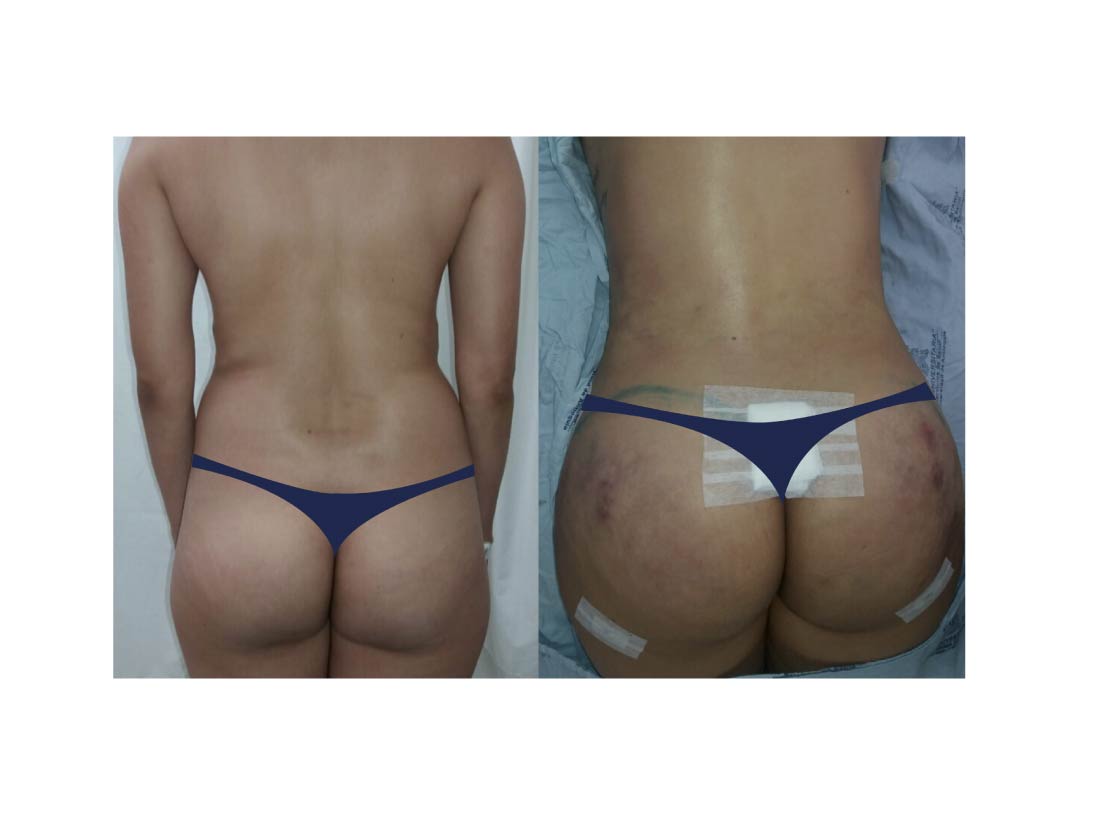
Liposuction (also known as body contouring, lipo, or fat transfer) is one of the most requested body contouring procedures worldwide to remove localized fat that is resistant to diet and exercise and to improve body contour. I perform body contouring procedures with natural, harmonious, and proportional results.
What is liposuction?
Liposuction (also known as body contouring, lipo, and fat transfer) is a body contouring surgical procedure that removes localized fat deposits from different areas of the body, such as the abdomen, hips, thighs, arms, back, or chin. The extracted fat can be transferred to the buttocks or other regions.
It is not a method for weight loss, but rather a technique to improve body contour when fat does not respond to diet and exercise.
Liposuction is one of the most effective procedures to improve body contour and achieve a more harmonious figure. Its main benefits include:
Elimination of localized fat
Allows removal of fat deposits that do not disappear with diet or exercise, especially in areas such as the abdomen, back, thighs, or arms.
Improvement of body contour
Defines and sculpts the silhouette, achieving more balanced and aesthetic proportions.
Visible and long-lasting results
Once removed, fat cells do not return, as long as the patient maintains healthy habits.
Increased confidence and self-esteem
By improving physical appearance, many patients experience greater self-confidence.
Personalized procedure
Adapted to each patient’s needs and goals, allowing natural and harmonious results.
Relatively fast recovery
With modern techniques, recovery time is increasingly shorter and more comfortable.
Preoperative evaluation for liposuction
The initial consultation is the most important step before undergoing liposuction, as it allows for a fully personalized and safe surgical plan for each patient. During this consultation, your health status, medical history, and lifestyle are reviewed to ensure you are an appropriate candidate for the procedure.
1
I perform a detailed body analysis, examining the areas to be treated, the quality of your skin, and fat distribution in order to determine the best technique.
2
It is also very important to understand your goals: we will discuss what you would like to improve and align expectations with realistic and natural results. Additionally, you will receive a full explanation of the procedure, including how liposuction is performed, the type of anesthesia, recovery times, and postoperative care.
3
The initial consultation is the ideal moment to resolve all your concerns and feel confident before making a decision.
4
At the end of the consultation, you will receive your lab orders, medication instructions, and postoperative care guidelines.
I typically request the following tests: complete blood count, coagulation tests, and pregnancy test. Depending on age and any prior or newly identified medical conditions, additional studies may be required.
Which medications should I stop?
It is important to discontinue medications such as aspirin, ibuprofen, naproxen, warfarin, anti-inflammatory drugs, omega-3 supplements, ginkgo biloba, green tea, vitamin E, and garlic at least 14 days before surgery. These instructions must be followed under medical supervision. You should never stop medications prescribed by your physician without prior authorization.
Physical and nutritional preparation
Maintain proper hydration, follow a balanced diet, avoid alcohol for 2 weeks prior to surgery, and stop smoking at least 4 weeks before the procedure to reduce the risk of complications.
Day of surgery
For the day of surgery, it is very important to fast for at least 8 hours.
Find answers to all your questions in this section.
Procedure, Technique, and Types of Liposuction
How is liposuction performed?
The procedure generally follows these steps:
Small incisions are made in the treatment area.
A cannula (thin tube) connected to a suction system is inserted.
The fat is loosened and carefully aspirated.
The fat is transferred to the buttocks or selected areas.
Types of liposuction I perform
Traditional liposuction
High-definition liposuction
Ultrasound-assisted liposuction
360 liposculptur
Liposuction with J-Plasma, Renuvion, and skin retraction
The specific technique depends on each case, which is why a preoperative consultation is essential.
What areas of the body can be treated with liposuction?
Common areas include the abdomen, flanks, back, thighs, hips, arms, chin, and knees. Multiple areas can be treated in a single procedure.
What is the difference between liposuction and liposculpture?
Liposuction removes fat, while liposculpture focuses on shaping and defining the body.
What type of liposuction is best?
There is no single best technique for every case. Traditional liposuction removes fat effectively, while technologies such as ultrasound (VASER) and Renuvion (J-Plasma) can help improve definition and skin retraction in selected patients. The choice depends on the patient’s anatomy and goals.
What is high-definition liposuction (Lipo HD) or abdominal marking?
It is an advanced technique that enhances muscular definition, especially in areas such as the abdomen, waist, or back.
What is fat transfer or lipoinjection?
It is the process of reusing the extracted fat to enhance other areas of the body, such as the buttocks, face, or hips.
Candidates, Benefits, and Limitations
Who is a good candidate for liposuction?
The ideal candidate for liposuction is an adult with relatively stable weight (BMI under 30).
Good skin quality
Good overall health
Realistic expectations
It is not a treatment for obesity nor a substitute for healthy lifestyle habits.
Is liposuction a weight loss method?
No. Liposuction is not intended for weight loss, but rather to improve body contour by removing localized fat.
Does liposuction remove visceral fat?
No. Liposuction removes subcutaneous fat, which is located under the skin, but it does not remove visceral fat around internal organs.
Does liposuction improve cellulite?
It may slightly improve its appearance, but it is not a specific treatment for cellulite.
Can liposuction define the abdomen?
Yes, in selected patients it can improve abdominal definition, especially when combined with advanced techniques and good skin quality.
How much fat can be removed?
This depends on each patient and medical safety criteria. The goal is to achieve a safe and harmonious result.
How many liters of fat can be removed in liposuction?
The amount of fat that can be removed depends on medical safety criteria and the patient’s characteristics. The goal is not to remove the largest possible amount, but to achieve a harmonious result without compromising health.
Can I enhance my buttocks with the extracted fat?
Yes, through fat transfer to the buttocks, provided there is sufficient fat available and appropriate conditions.
Can liposuction be combined with other surgeries?
Yes, it is commonly combined with abdominoplasty, breast augmentation, or fat transfer.
Can liposuction be combined with other procedures?
Yes. It is frequently combined with abdominoplasty, breast implants, or gluteal implants. The important thing is not to exceed 8 hours of surgery.
Safety, Pain, and Medical Aspects
What type of anesthesia is used?
It depends on the extent of the procedure:
Local anesthesia with sedation for small areas.
General anesthesia when multiple areas or larger volumes are treated.
What type of anesthesia is used?
It can be performed with general or regional anesthesia, depending on the extent of the procedure and the medical evaluation.
Is liposuction painful?
Pain is usually moderate and well controlled with medication. Swelling and sensitivity are common during the first days. I use a pain pump or analgesic pump to reduce the intensity of the pain.
Is liposuction safe?
Yes, liposuction is a safe procedure when it is performed in a certified clinic by a qualified plastic surgeon. Preoperative evaluation, proper patient selection, and postoperative follow-up are essential to minimize risks and ensure good results.
Recovery, Care, and Timelines
Postoperative recommendations
After surgery, it is important to:
Start walking on the same day of surgery.
Wear a compression garment for several weeks.
Follow medical instructions and attend follow-up visits.
Maintain a healthy diet to preserve results.
Swelling, bruising, and sensitivity during the first weeks are normal.
How many hours does the procedure take?
The duration of liposuction in Medellín varies depending on the number of areas treated and the volume of fat to be removed. It generally lasts between 1 and 5 hours. It usually does not require hospitalization when performed as a standalone procedure.
When can I return to work?
It depends on the type of work and the extent of the procedure:
Office work: generally between 7 and 10 days.
Physically demanding work: between 2 and 4 weeks.
Swelling may last several weeks, and the final result is typically appreciated between 2 and 3 months.
What is recovery like?
Recovery is progressive. Most patients resume basic activities within a few days, although swelling may last several weeks.
How long should I wear a compression garment after liposuction?
It is recommended to wear compression garments for approximately 3 months to help tissue adaptation and optimize results.
What postoperative care is required after surgery?
Compression garments, lymphatic drainage, avoiding physical exertion, attending follow-up appointments, and following all medical instructions are required.
When can I exercise?
Physical activity can be resumed progressively after 4 to 6 weeks.
What are lymphatic drainage massages and are they necessary?
They are specialized massages that help reduce swelling, improve circulation, and optimize results. They are highly recommended.
How long does swelling last?
Initial swelling lasts several weeks and may persist mildly for up to 3 months or more.
Results, Changes, and Experience
Are the results permanent?
Yes, the removed fat cells do not return. However, maintaining healthy habits is essential to preserve results, since weight gain can affect the outcome.
When will I see results?
Changes are visible from the beginning, but final results are seen after 2 to 3 months, once swelling decreases.
Are there scars?
Incisions are small and strategically placed, so scars are minimal and usually barely visible.
Will my skin become loose after liposuction?
It depends on skin quality. In patients with good elasticity, the skin adapts well. In other cases, additional procedures may be necessary.
Will I need another surgery in the future?
Not necessarily, but it may be considered in case of weight changes, aging, or new aesthetic goals.
What happens if I gain weight after liposuction?
If you gain weight after surgery, fat may accumulate again, which can affect the harmony of the result. This is why maintaining a healthy lifestyle is essential.
Can liposuction achieve natural results?
Yes. When performed properly and with an appropriate aesthetic approach, results are natural, harmonious, and proportional to the patient’s body.
Travel, Logistics, and Costs
How much does liposuction cost in Medellín?
The price depends on surgical time, the clinic selected, areas to be treated, required equipment, and patient-specific conditions. For this reason, it is very important to attend a consultation to provide an exact cost.
Can I travel after liposuction?
Yes, but it is recommended to wait a few days and obtain medical clearance.
How long should I stay in the city if I travel for surgery?
A minimum stay of 10 days after surgery is recommended for initial follow-up, especially for international patients.
Risks
Liposuction performed by a board-certified plastic surgeon in an accredited facility is a safe procedure with a serious complication rate of less than 1%. As with any surgery, there are risks, which are significantly minimized with proper surgeon selection, comprehensive preoperative evaluation, and appropriate postoperative follow-up.
Contour irregularities:
Irregularities or asymmetries may occur, especially if postoperative instructions are not followed. Surgical expertise significantly reduces this risk.
Seroma:
Accumulation of fluid under the skin. Relatively common and treatable with small aspirations in the office. Compression garments reduce its likelihood.
Infection:
Reduced with perioperative antibiotics and proper incision care. Warning signs include warmth, progressive redness, and fever.
Changes in sensation:
Temporary numbness in treated areas is common and usually resolves within 3 to 6 months. In rare cases, it may be permanent in small areas.
Residual skin laxity:
Patients with compromised skin elasticity may require additional procedures (such as abdominoplasty or J-Plasma) to tighten the skin. This is evaluated during the preoperative consultation.
All surgical risks will be explained during your consultation.
The best protection is making the right choice: verify that your surgeon is certified by the Colombian Society of Plastic Surgery (SCCP), that the procedure is performed in an accredited operating room with a certified anesthesiologist, and that postoperative follow-up is included and guaranteed.