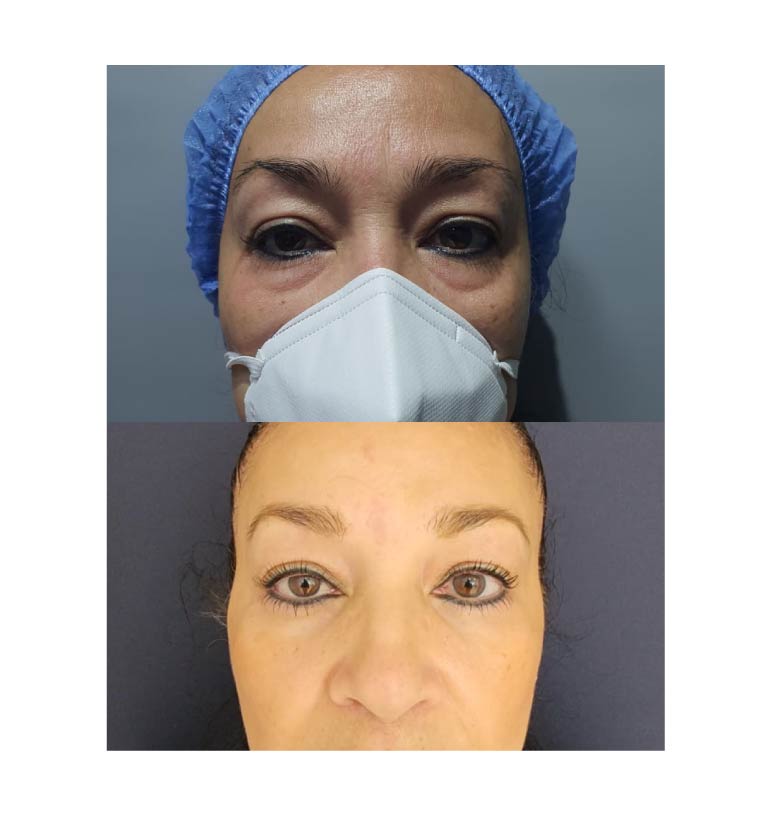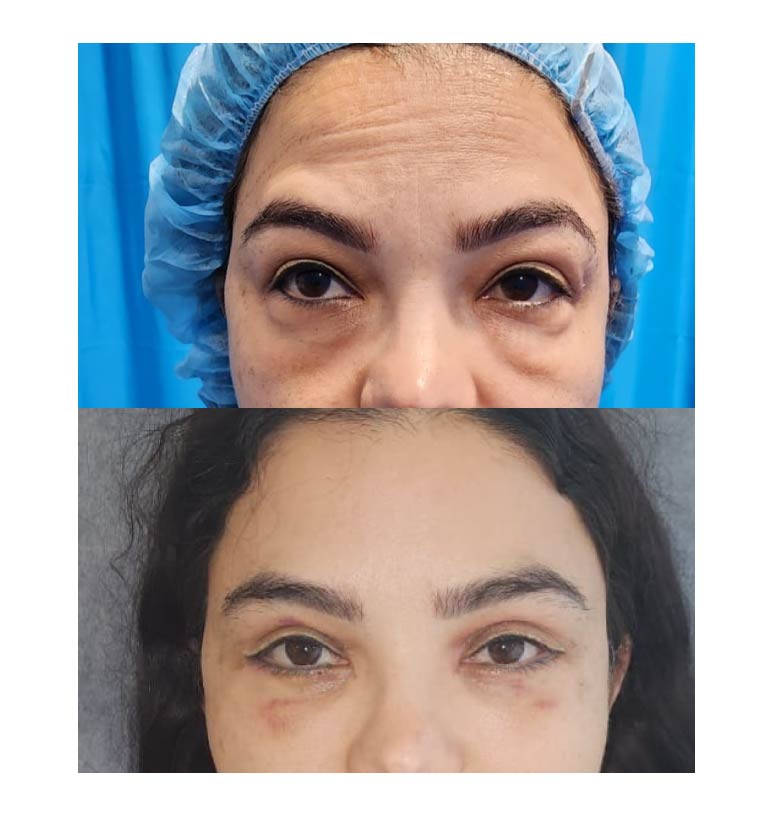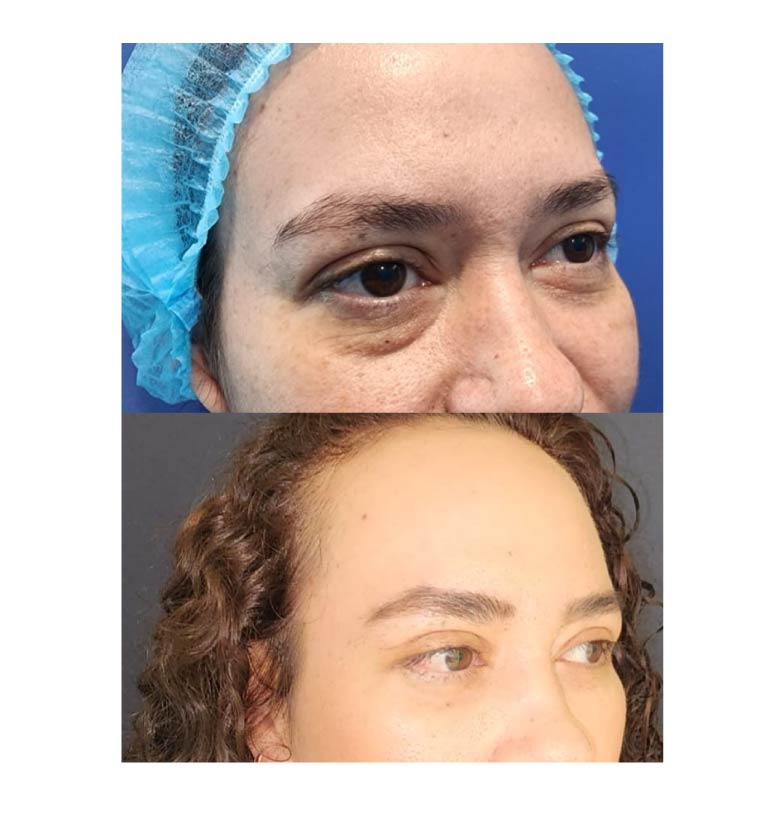
Blepharoplasty | Eyelid Surgery
Eye Rejuvenation with Natural Results
Blepharoplasty in Medellín, also known as eyelid surgery, is a cosmetic and functional plastic surgery procedure designed to rejuvenate the eyes, remove excess skin and fat from the eyelids, and restore a more youthful, fresh, and rested appearance to the face.
Over time, the eyelids may develop laxity, puffiness, drooping skin, and excess fatty tissue, which creates a tired, aged appearance and, in some cases, visual problems. Blepharoplasty allows these changes to be corrected in a safe, precise, and natural way.
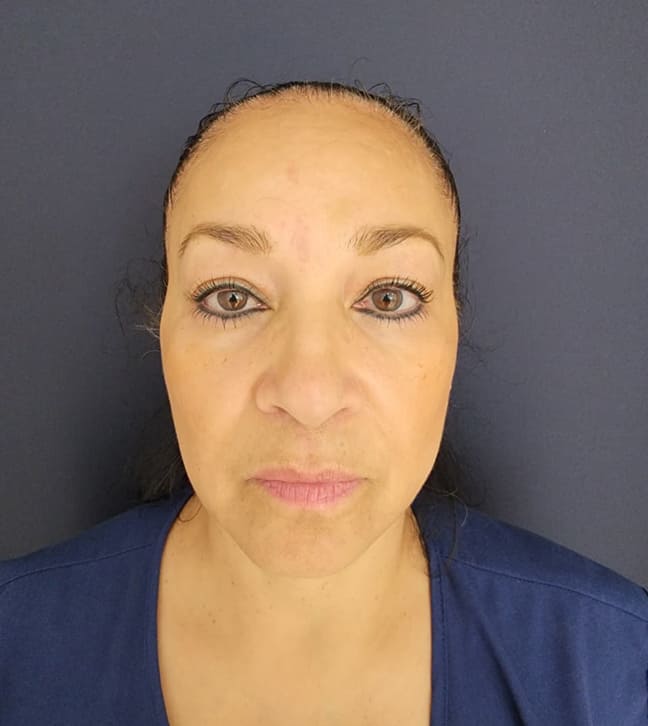
What is Eyelid Surgery (Blepharoplasty)?
Blepharoplasty is a plastic surgery procedure that removes excess skin, fat, and, in some cases, muscle from the upper and/or lower eyelids.
It can be performed for aesthetic purposes (facial rejuvenation) or functional purposes (when excess skin interferes with the visual field).
- Rejuvenation of the eyes
- Removal of droopy eyelids
- Correction of under-eye bags
- Improvement of facial expression
- Restoration of a more rested and harmonious appearance
Preoperative Evaluation For Eyelid Surgery (Blepharoplasty)
- General health status
- Medical and ophthalmological history
- Skin quality and degree of aging
- Presence of fat pads or excess skin
- Position of eyebrows and eyelids
- Patient expectations
The procedure is also explained step by step, including the type of anesthesia, recovery times, and postoperative care.
At the end of the consultation, tests, medications, and preoperative recommendations are indicated.

Preparation Before Eyelid Surgery (Blepharoplasty)
What tests do I need for Eyelid Surgery (Blepharoplasty)?
What medications should I stop before Eyelid Surgery (Blepharoplasty)?
General preparation for Eyelid Surgery (Blepharoplasty)
- Avoid alcohol 2 weeks before
- Do not smoke for at least 4 weeks before
- Maintain good hydration and nutrition
Ideal Candidates For Eyelid Surgery (Blepharoplasty)
- Patients with excess skin in the upper eyelids
- Presence of under-eye bags
- Tired or aged appearance
- Individuals in good general health
- Patients with realistic expectations
- It may also have a functional component when excess skin affects the visual field.
Recovery After Eyelid Surgery (Blepharoplasty)
INITIAL PHASE (FIRST 3–5 DAYS)
During the first days it is normal to present swelling, bruising (ecchymosis), a feeling of tension, and mild discomfort in the treated area.
It is recommended:
- Apply cold compresses intermittently during the first 48 hours to reduce swelling
- Keep the head elevated even while sleeping
- Relative rest
- Avoid reading, using screens, or activities that generate visual fatigue
- Do not rub the eyes
- Use prescribed medications (analgesics, antibiotics, or ocular lubricants if indicated)
It is possible to present tearing, sensitivity to light, or mild and temporary blurred vision.
FIRST WEEK
Swelling and bruising may reach their peak and then begin to progressively decrease.
It includes:
- Suture removal between day 5 and 7 (in upper blepharoplasty)
- Progressive return to light daily activities
- Continue local care and proper hygiene of the area
At this stage it is still important to avoid physical effort and sun exposure.
SECOND WEEK
Most bruising begins to disappear and swelling decreases significantly.
At this stage:
- The patient can resume social activities with greater confidence
- Makeup may be resumed (depending on evolution)
- Moderate use of screens is allowed
The appearance is already much more natural, although recovery continues.
INTERMEDIATE PHASE (3–4 WEEKS)
Functional recovery is almost complete.
It is allowed:
- Gradual return to physical exercise
- Full reintegration into work routine
- Greater tolerance to prolonged visual activities
Scars begin to mature and become less visible.
FINAL RESULT (1–3 MONTHS)
The final result of blepharoplasty becomes progressively evident.
At this stage:
- Residual swelling disappears
- Scars become almost imperceptible
- The eyes look more rested, fresh, and rejuvenated
In some cases, complete scar maturation may take several months.
Frequently Asked Questions
Procedure, technique, and types of blepharoplasty
How is Eyelid Surgery (Blepharoplasty) performed?
The surgery is performed in certified operating rooms, under strict safety protocols.
- Personalized surgical marking
- Administration of anesthesia (local with sedation or general, depending on the case)
- Discreet incisions in the natural folds of the eyelid
- Removal of excess skin and fat
- Repositioning of tissues if necessary
- Closure with high-precision aesthetic sutures
The scars remain hidden in the natural folds of the eyelid, becoming practically imperceptible over time.
How long does Eyelid Surgery (Blepharoplasty) take?
The duration depends on the type of blepharoplasty and the areas treated.
- Average duration: 2 hours
- Upper eyelids only
- Lower eyelids only
- Complete blepharoplasty (upper and lower)
What type of Eyelid Surgery (Blepharoplasty) do I need according to my case?
How do I know if I need Eyelid Surgery (Blepharoplasty) or non-surgical treatments?
What is the difference between Eyelid Surgery (Blepharoplasty) and brow lift?
What is the difference between lower Eyelid Surgery (Blepharoplasty) with and without scar?
What complementary technology can be used in Eyelid Surgery (Blepharoplasty)?
Can other surgeries be combined with Eyelid Surgery (Blepharoplasty)?
Yes, it is common to combine it with facelift, brow lift, rhinoplasty, or skin rejuvenation procedures to achieve more comprehensive results.
Candidates, benefits, and results
Results
The results of blepharoplasty are:
- Natural
- Long-lasting
- Harmonious
- Rejuvenating
- Aesthetic and functional
The eyes appear younger, fresher, and more rested, without losing the natural expression of the face.
Am I a candidate for Eyelid Surgery (Blepharoplasty)?
Candidates include:
- Patients with excess skin in the upper eyelids
- Presence of under-eye bags
- Tired or aged appearance
- Individuals in good general health
- Patients with realistic expectations
It may also have a functional component when excess skin affects the visual field.
Will I look natural after Eyelid Surgery (Blepharoplasty)?
Is Eyelid Surgery (Blepharoplasty) worth it?
At what age is Eyelid Surgery (Blepharoplasty) recommended?
Does Eyelid Surgery (Blepharoplasty) make the eyes look older or younger?
Does Eyelid Surgery (Blepharoplasty) change the shape of the eyes?
Does Eyelid Surgery (Blepharoplasty) make the eyes look artificial?
Does Eyelid Surgery (Blepharoplasty) improve dark circles?
Does Eyelid Surgery (Blepharoplasty) remove wrinkles?
Can Eyelid Surgery (Blepharoplasty) be performed in men?
Does Eyelid Surgery (Blepharoplasty) make the eyes look bigger?
Is it better to undergo Eyelid Surgery (Blepharoplasty) before or after 40?
It depends on the patient. There is no exact age, but rather an indication based on anatomical needs.
Safety, pain, and medical aspects
What are the warning signs after Eyelid Surgery (Blepharoplasty)?
It is important to consult immediately if the following occur:
- Severe or progressive pain
- Decreased vision
- Persistent bleeding
- Fever
- Excessive redness or discharge
Factors that increase risk
Some factors may increase the likelihood of complications:
- Smoking
- Previous eye diseases
- Uncontrolled hypertension
- Coagulation disorders
- Advanced age with poor skin quality
- Failure to follow medical instructions
How to minimize risks
To reduce risks, it is important to:
- Choose a certified plastic surgeon
- Perform a complete preoperative evaluation
- Strictly follow medical instructions
- Avoid smoking before and after surgery
- Attend postoperative follow-up visits
- Use medications and ocular care appropriately
Does Eyelid Surgery (Blepharoplasty) affect vision?
It does not negatively affect vision if there are no complications. In some cases, it can even improve the visual field.
What type of anesthesia is best for Eyelid Surgery (Blepharoplasty)?
What complications are most common in Eyelid Surgery (Blepharoplasty)?
Is Eyelid Surgery (Blepharoplasty) painful?
What type of anesthesia is used in Eyelid Surgery (Blepharoplasty)?
Does Eyelid Surgery (Blepharoplasty) improve vision?
Yes, in cases where excess skin limits the visual field.
Recovery, care, and timelines
When can I return to work after Eyelid Surgery (Blepharoplasty)?
The time to return to work depends on the type of activity:
- Administrative or office work: 7 days
- Physical or strenuous work: 3 weeks
Although the patient can resume daily activities within a few days, mild swelling may persist for several weeks.
Postoperative care after Eyelid Surgery (Blepharoplasty)
For a safe recovery and optimal results, the following is recommended:
- Use cold compresses during the first days
- Sleep with the head slightly elevated
- Avoid direct sun exposure
- Do not use makeup in the area during the initial phase
- Do not perform intense exercise during 4 weeks
- Strictly follow medical instructions
- Attend postoperative follow-up appointments
- Maintain proper eye hygiene
Important care during recovery after Eyelid Surgery (Blepharoplasty)
During recovery, it is important to:
- Avoid direct sun exposure for at least 4 weeks
- Use sunscreen and dark glasses
- Do not perform intense exercise during 4 weeks
- Avoid alcohol and tobacco
- Maintain adequate hydration
- Follow all medical instructions
When can I wear makeup after Eyelid Surgery (Blepharoplasty)?
When can I return to exercise after Eyelid Surgery (Blepharoplasty)?
Can I wear contact lenses after Eyelid Surgery (Blepharoplasty)?
Yes, but it is generally recommended to wait between 1 and 2 weeks before using them again.
What sun care should I follow after Eyelid Surgery (Blepharoplasty)?
How long should I avoid screens after Eyelid Surgery (Blepharoplasty)?
What mistakes should I avoid after Eyelid Surgery (Blepharoplasty)?
Can I wear makeup after Eyelid Surgery (Blepharoplasty)?
Can I work after Eyelid Surgery (Blepharoplasty)?
Administrative or office work: 7 days
Physical or strenuous work: 3 weeks
Duration, scars, and evolution of results
How long do the results of Eyelid Surgery (Blepharoplasty) really last?
Can bags reappear after Eyelid Surgery (Blepharoplasty)?
What happens if I do not undergo Eyelid Surgery (Blepharoplasty) in time?
How visible is the scar after Eyelid Surgery (Blepharoplasty)?
When will I see the final results of Eyelid Surgery (Blepharoplasty)?
Is Eyelid Surgery (Blepharoplasty) permanent?
How often is it necessary to repeat Eyelid Surgery (Blepharoplasty)?
How does genetics influence the results of Eyelid Surgery (Blepharoplasty)?
Does Eyelid Surgery (Blepharoplasty) leave scars?
How long does Eyelid Surgery (Blepharoplasty) take?
When will I see results after Eyelid Surgery (Blepharoplasty)?
Costs
What is the cost of Eyelid Surgery (Blepharoplasty)?
The cost of surgery depends on several factors, including:
- Type of blepharoplasty (upper, lower, or complete)
- Complexity of the case
- Use of additional techniques
- Clinic and medical team
- Surgeon’s fees
A personalized evaluation is required to determine the cost.
How much does Eyelid Surgery (Blepharoplasty) cost?
The cost of surgery depends on several factors, including:
- Type of blepharoplasty (upper, lower, or complete)
- Complexity of the case
- Use of additional techniques
- Clinic and medical team
- Surgeon’s fees
A personalized evaluation is required to determine the cost.
What are the risks of Eyelid Surgery (Blepharoplasty)?
Blepharoplasty is a safe procedure when performed by a certified plastic surgeon and in an appropriate setting. However, like any surgery, there are risks that must be clearly understood by the patient.
Most complications are uncommon and many are temporary, but it is essential to know them in order to make an informed decision.
All risks are completely explained during the consultation.
Why choose me as your surgeon?
- Advanced blepharoplasty techniques
- Focus on safety and precision
- Natural and proportional results
- Personalized treatment planning
- Specialized care for international patients
- VIP personalized patient experience
- Competitive pricing